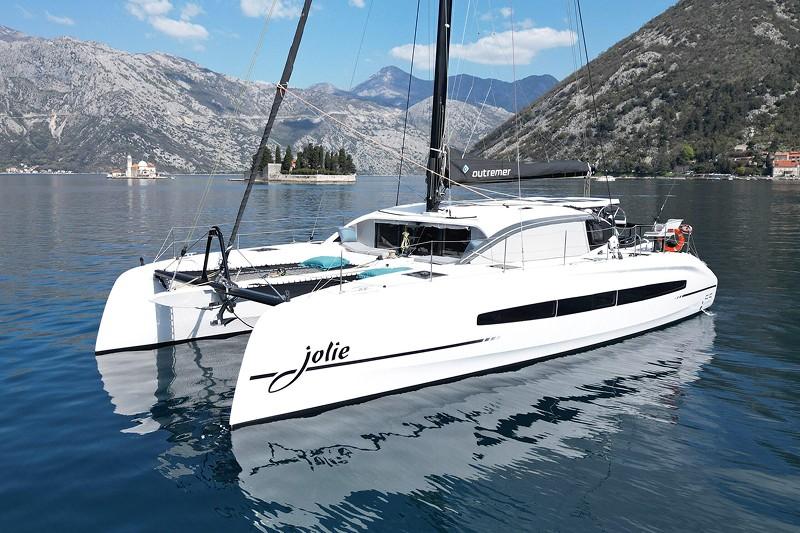
What is an offshore cruiser? An offshore cruiser is a boat built for extended passages beyond coastal waters, with the range, stability, and sea-keeping to handle open water for days at a time. The main types are trawlers, sailing catamarans, monohull yachts, and efficient hybrid designs like Omikron, each suited to a different way of spending time on the water. This guide walks through the pros and cons of each, with a real boat to look at and a category to explore when you're ready to compare more.
Trawlers for Offshore Cruising: Pros and Cons
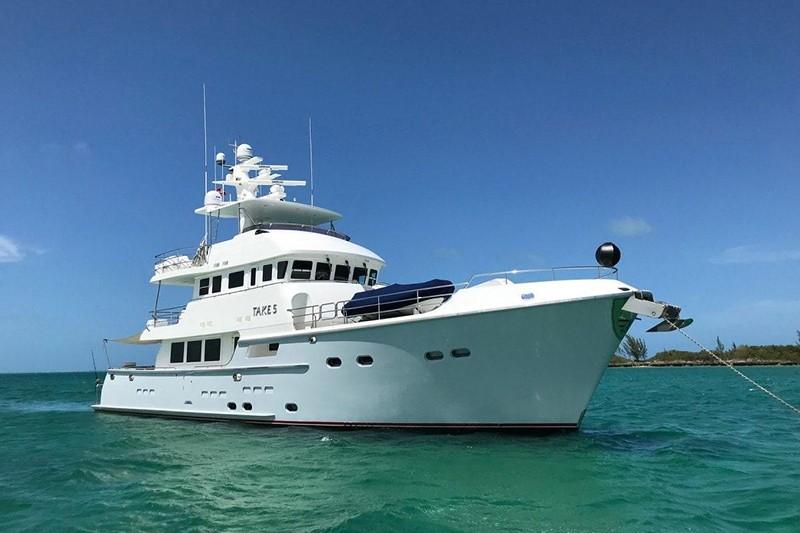
Pros: exceptional fuel range, steady and stable at rest, more interior space than a monohull of similar length. Cons: slower cruising speeds than a planing powerboat, less exhilarating under way than a sailing yacht.
The deep, heavy hull holds steady at anchor, so life aboard stays settled even when you're not moving, and the wide beam carries through into wider saloons, fuller cabins, and deck areas made for spending time rather than working sails.
Sailing Catamarans for Offshore Cruising: Pros and Cons
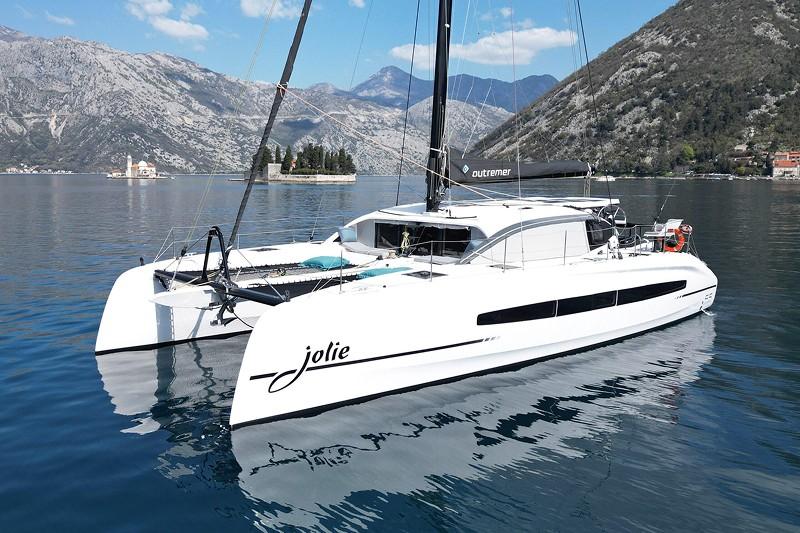
A sailing catamaran spreads its accommodation across 2 hulls and a wide bridge deck, built for stable, level cruising under sail.
Pros: generous, level living space, very little heel at sea or at anchor, shallow draught for wider anchorage options. Cons: fewer berthing options in marinas built for monohulls, can feel less forgiving than a monohull in extreme weather.
The light, slender hulls of a performance cat can also make genuinely quick passages, often covering more ground in a day than a monohull of the same length. For families, and for anyone who values deck space and stability, a sailing catamaran is a natural fit.
Monohull Yachts for Offshore Cruising: Pros and Cons
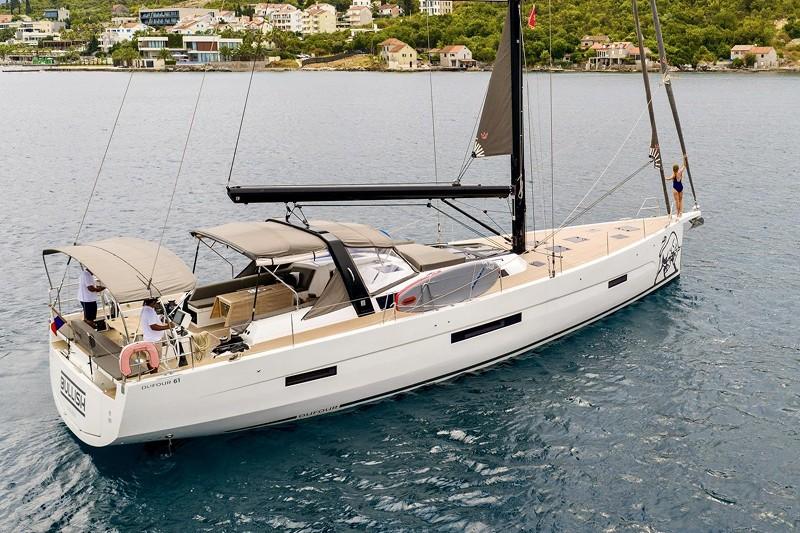
A monohull yacht is a single-hulled sailboat, still the most traditional way to cross an ocean under sail.
Pros: a genuine, responsive sailing experience, can be more comfortable and forgiving in extreme weather, wide choice of standard marina berths. Cons: less deck and cabin space than a catamaran of similar length, heels under sail in a way some find tiring over long passages.
A well-found monohull is built to ride through big seas and recover easily if knocked down, which is part of why it remains the default choice for serious offshore sailors. It also fits standard marina berths almost anywhere, so finding a place alongside is usually easier, and often cheaper, than with a wide catamaran.
Omikron for Offshore Cruising: Pros and Cons
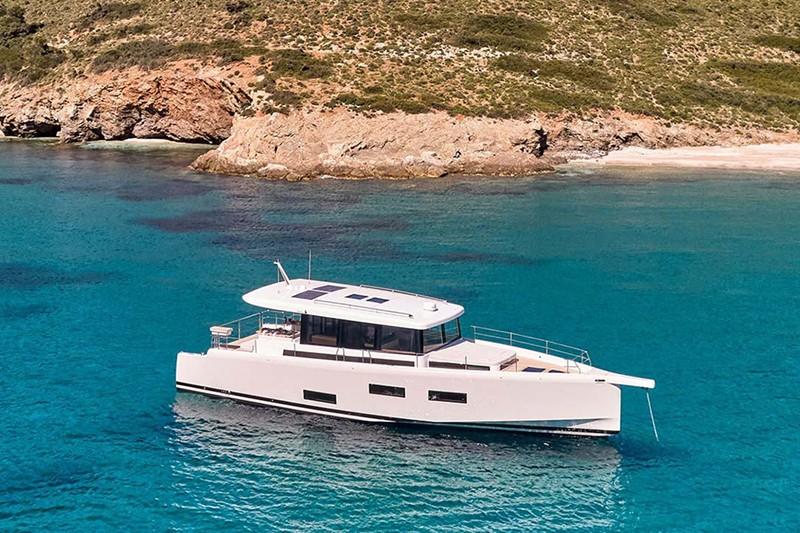
Omikron takes the efficient, easily driven hull of a modern sailing yacht and builds it out into a motor cruiser with space and luxurious open living.
Pros: exceptional fuel economy for the size, wide open-plan living, quiet and stable at cruising speed. Cons: As it’s a new type of motor yacht there are fewer listings and dealers to choose from than the more established categories above.
Thanks to its highly efficient hull shape, the OT-60 has astonishingly low fuel consumption of just 1.2 litres per nautical mile at 8 knots, with approximately 1,600 nautical miles of range depending on the configuration. It's Category A rated for ocean passages, with the relaxed, connected-to-the-water feel that comes from its sailing heritage.
Offshore Cruiser Types Compared
Trawler: Best for long range, economy, space at rest. Watch out for: slower speeds.
Sailing catamaran: Best for stability, deck space, fast passages. Watch out for: marina berth availability.
Monohull yacht: Best for genuine sailing feel, heavy-weather comfort. Watch out for: less interior space.
Omikron: Best for fuel economy with motoryacht comfort. Watch out for: fewer listings to compare.
Frequently Asked Questions
What are the pros and cons of a trawler for offshore cruising?
A trawler offers excellent fuel range, stability at anchor, and more interior space than a monohull, but cruises more slowly than a planing powerboat and offers less of the responsive feel of a sailing yacht.
Is a catamaran or monohull better for offshore sailing?
A catamaran offers more space and stability with very little heel, while a monohull is generally considered more forgiving in extreme weather and easier to berth. The right choice depends on whether you prioritise living space and comfort at anchor, or heavy-weather confidence and berthing flexibility.
What are the disadvantages of a sailing catamaran offshore?
The main disadvantages are fewer berthing options, since many marinas are built around narrower monohulls, and a ride that some sailors find less forgiving than a monohull's in very heavy weather.
Why choose a monohull over a catamaran for an ocean crossing?
A monohull gives a genuine, responsive sailing experience, generally handles extreme weather comfortably, and fits into standard marina berths almost anywhere, which can make ocean crossings more straightforward to plan.
How much fuel range do you need for offshore cruising?
This depends on the passage, but boats built for genuine ocean crossings, such as the Nordhavn 76 or Omikron OT-60, are designed for ranges of 1,000 nautical miles or more between fuel stops.
Find Yours - Then Do The Groundwork
Choosing between these comes down to how you want to spend your time on the water, and often the clearest way to decide is to see the boats side by side. Each category above links to live listings on Boatseekr, where you can filter by length, price, and location, or use image search to find boats that look like the one you already have in mind.
Once you've found a boat that appeals, the real work is just beginning. What makes a boat capable offshore depends on far more than her type or class. Structural integrity, rigging, the redundancy of key systems such as steering and bilge pumps, and safety equipment must all be thoroughly evaluated and assessed.
But the good news is that if you're new to offshore cruising, you don't have to work it out alone. Groups like Island Cruising are a great place to start, helping guide people through offshore sailing with rallies, courses, and advice from those who've made the passages themselves.