
1958 Blanchard Pilothouse for sale in San Mateo, CA
San Mateo, CA, United States195818.9m
Asking PriceBroker
$329,000 USD
 +31 more
MakeBlanchard
ModelPilothouse
Year1958
Length18.9m5m beam
Cabins3
EngineGMDetroit Diesel 6V92
Overview
About this vessel
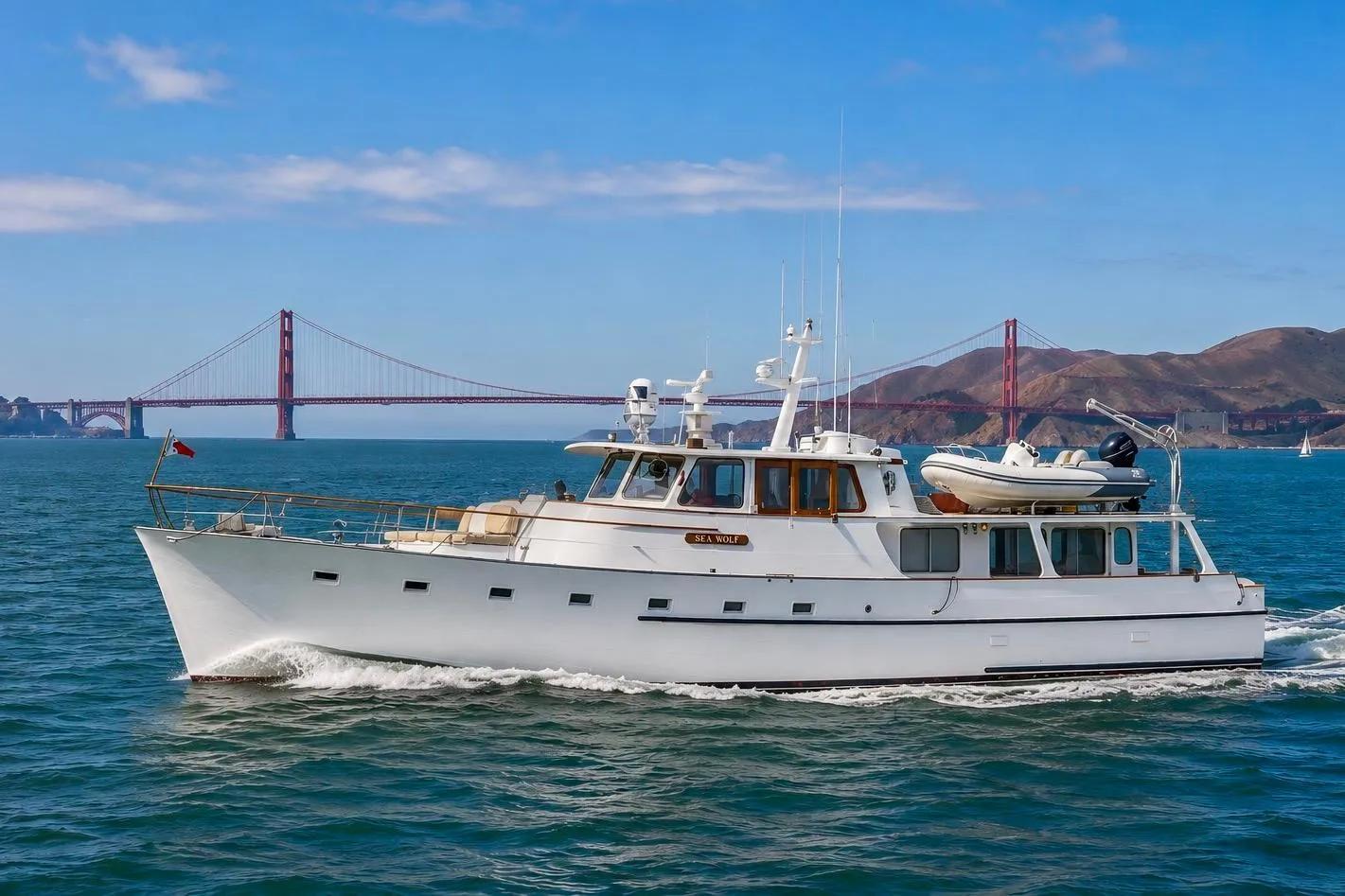
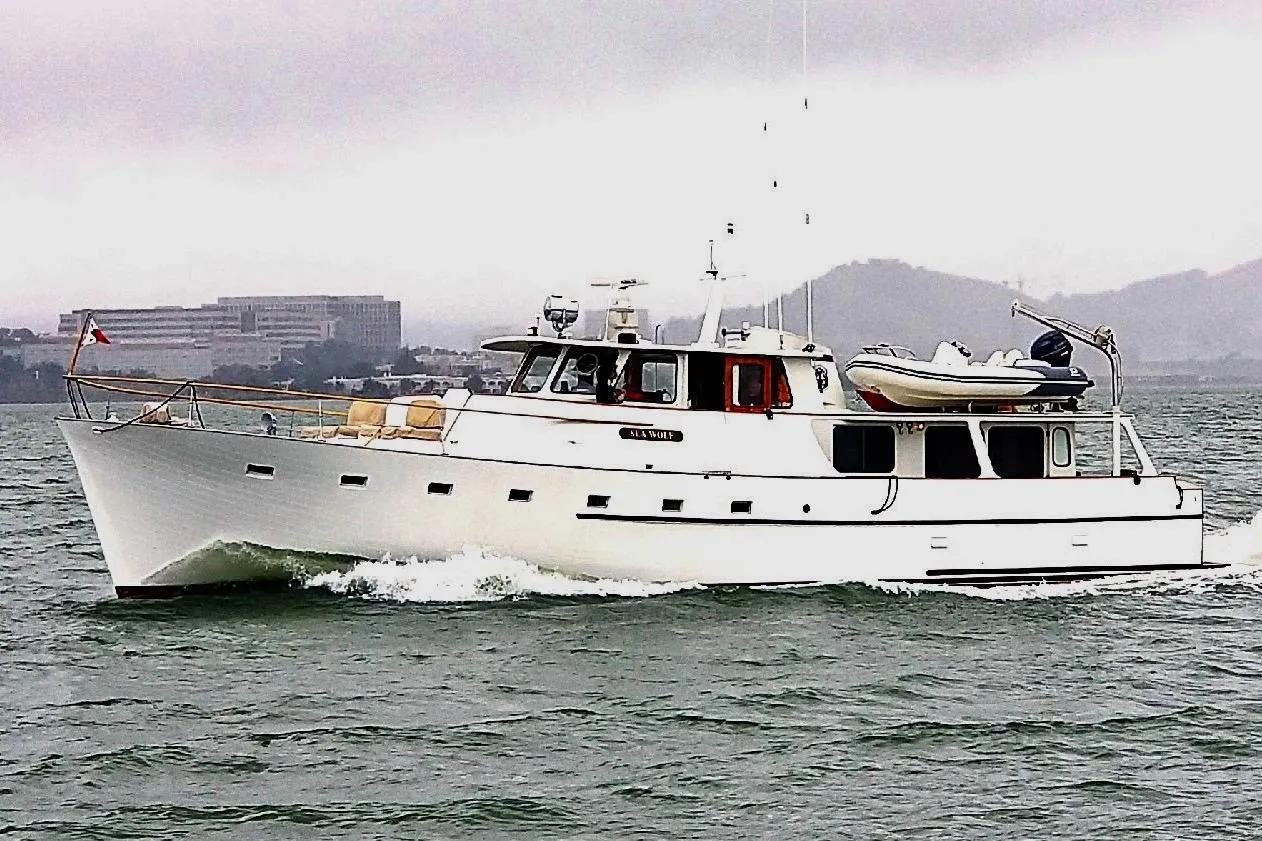
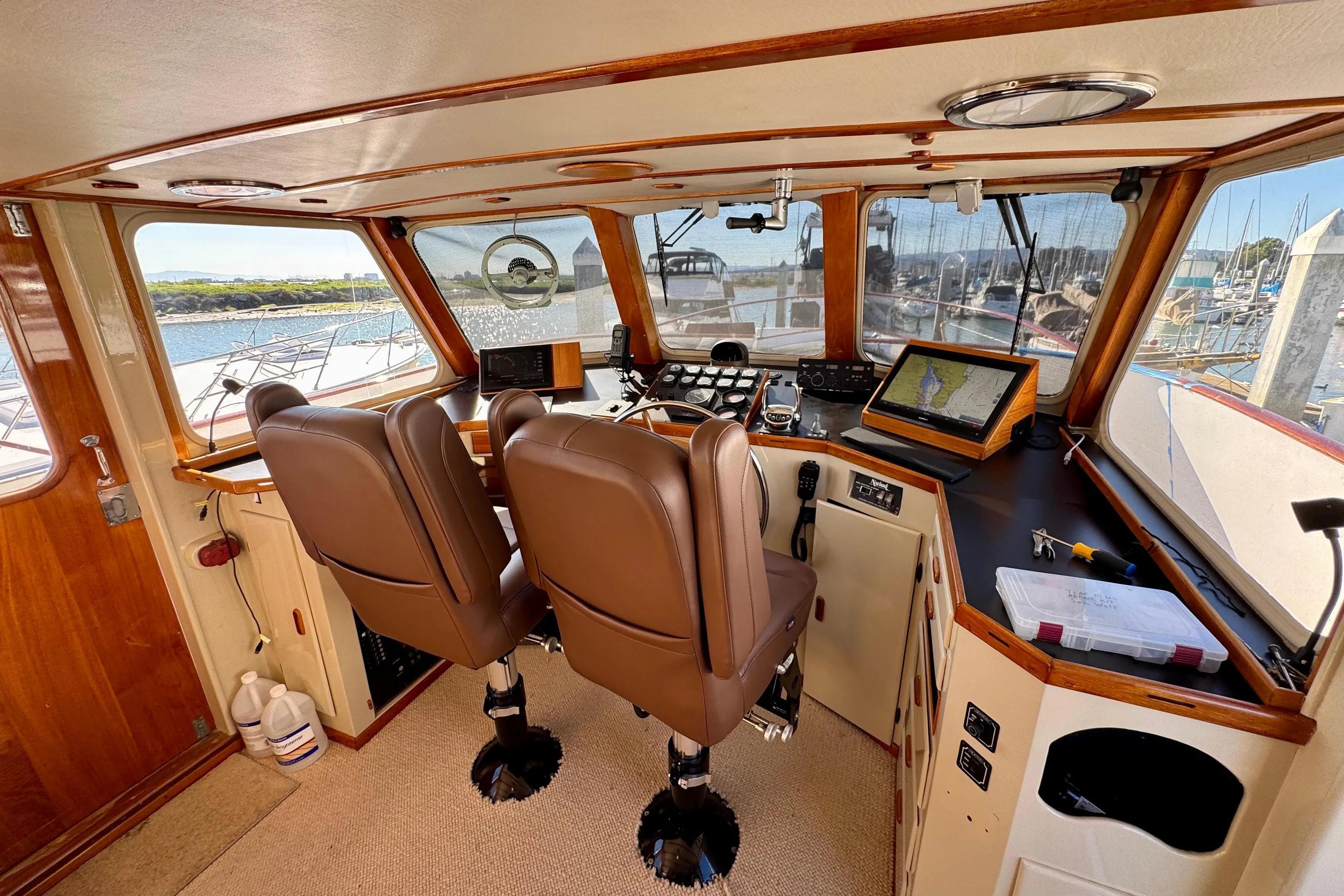
SEA WOLF, a 1958 Blanchard 62 Pilothouse Motoryacht, is a very special vessel because it represents the peak of Pacific Northwest wooden yacht craftsmanship during the post-war golden age of yacht building. Boats from the famed N.J. Blanchard Boat Company yard in Seattle were renowned for their robust construction, elegant proportions, and exceptional sea-keeping qualities.
The Blanchard yard produced some of the most respected yachts on the West Coast. Their vessels were favored by prominent Pacific Northwest families and experienced cruisers. Surviving examples are often regarded as floating pieces of maritime history.
SEA WOLF is regarded by many classic-yacht enthusiasts as one of the finest surviving examples of a large Pacific Northwest wooden cruising yacht from the late 1950s. While individual boats evolve through refits and ownership changes, what makes SEA WOLF remarkable is the combination of her size, pedigree, construction, and era.
According to the Classic Yacht Association registry, SEA WOLF was launched in 1958 as BLUE HERON III, the third in a series commissioned by industrialist Casey Jones and designed by the renowned naval architect William Garden (Bill Garden). She was built by the Blanchard yard in Seattle and is considered one of Garden's most successful family cruising motor-yacht designs.
Garden Design Characteristics
Bill Garden's "Shippy" Design
Garden himself wrote about the Blue Heron design in his design book. He emphasized that the yacht was intended for serious family cruising rather than marina display. He praised its "shippy look" and noted that it avoided the "two-story yacht" appearance common among luxury yachts.
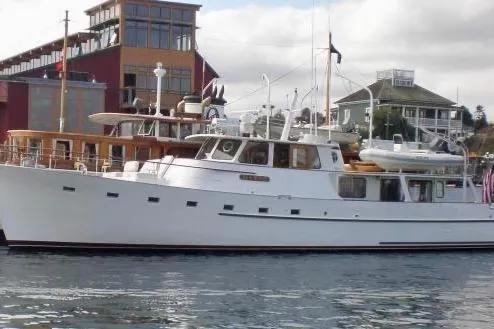
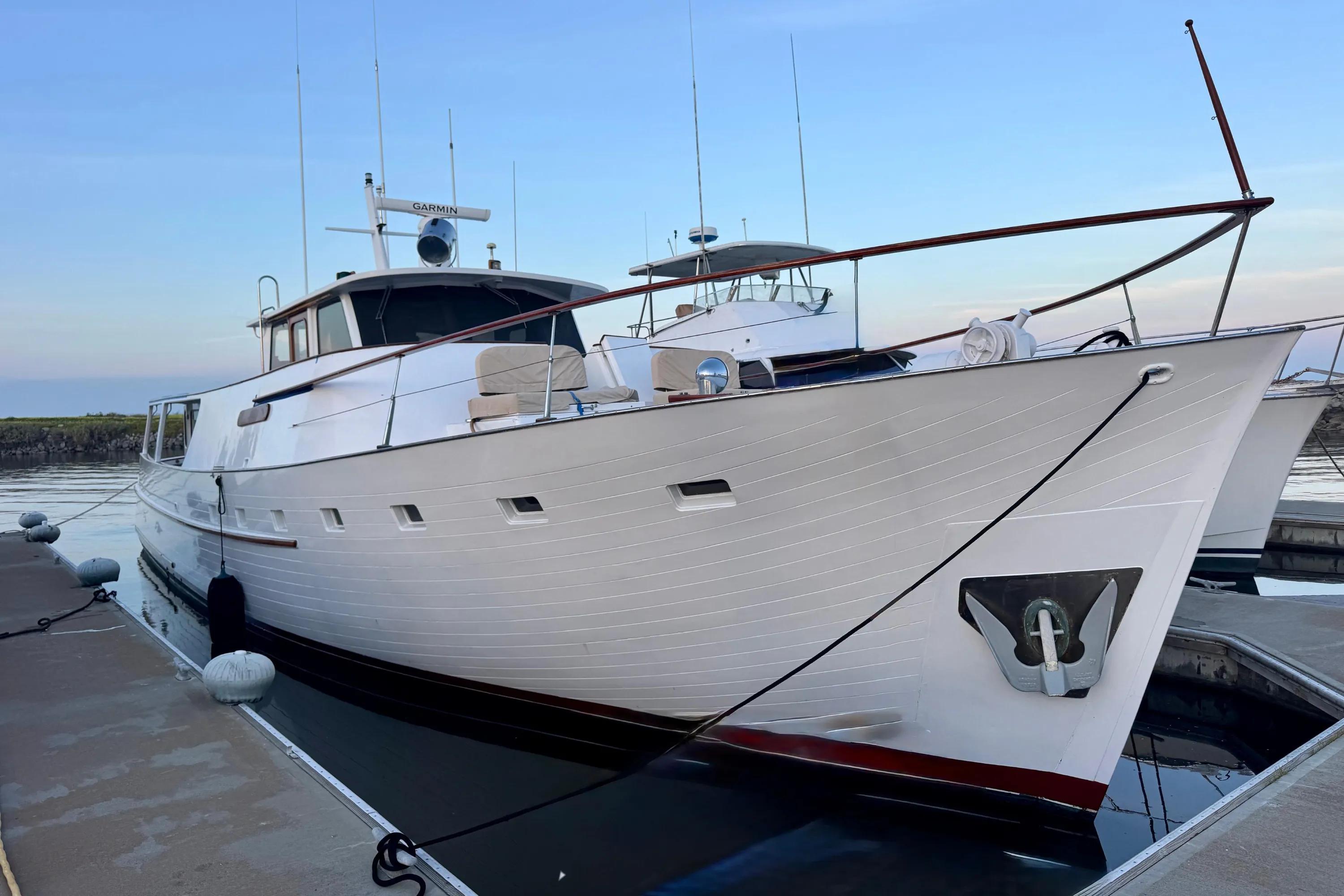
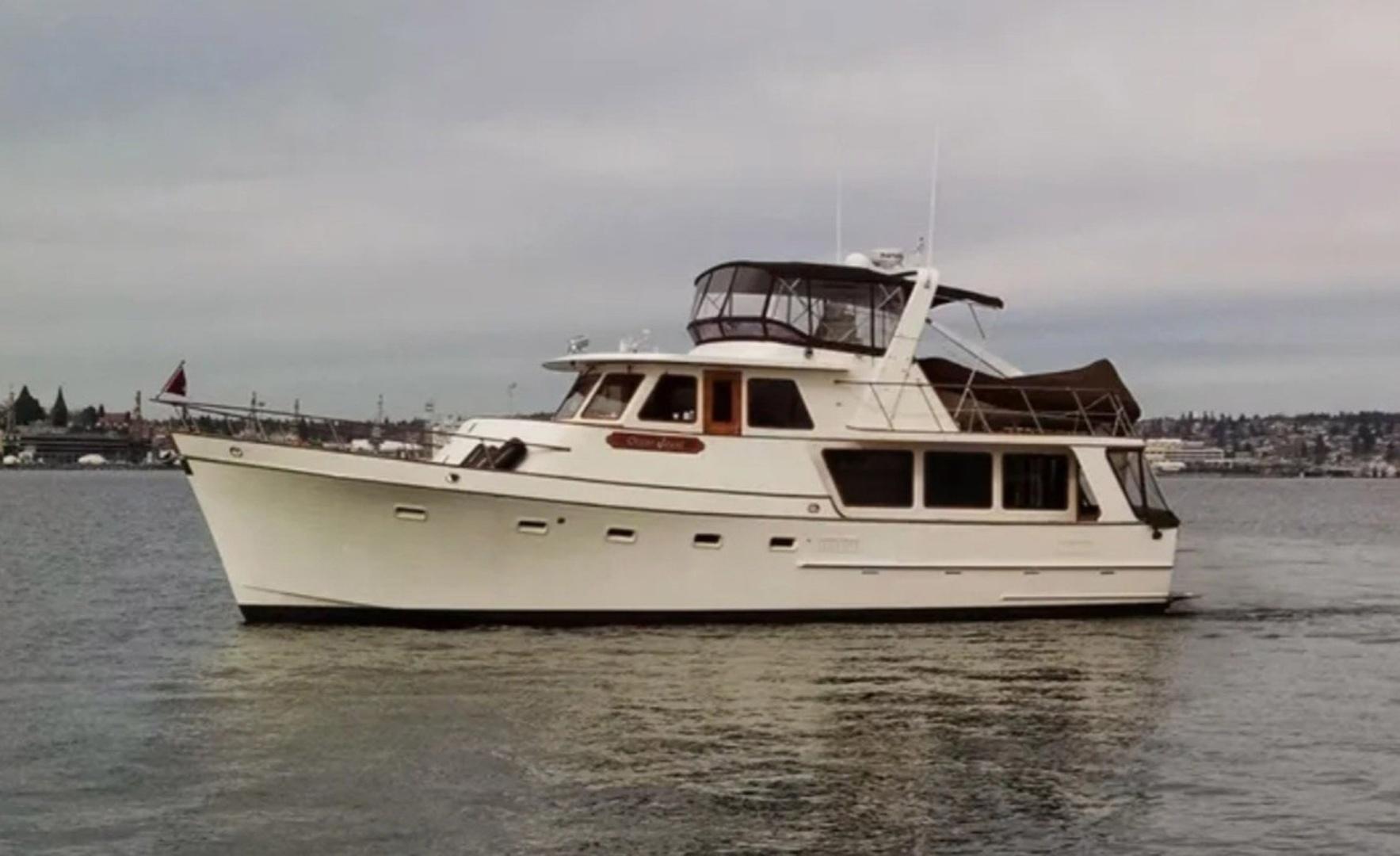
For many yacht aficionados, this is SEA WOLF's greatest attribute: long, low profile; proper working-vessel proportions; deep bulwarks; raised pilothouse; powerful bow and moderate freeboard; and no unnecessary superstructure. The result is a yacht that looks as if she belongs at sea.
Extraordinary Construction
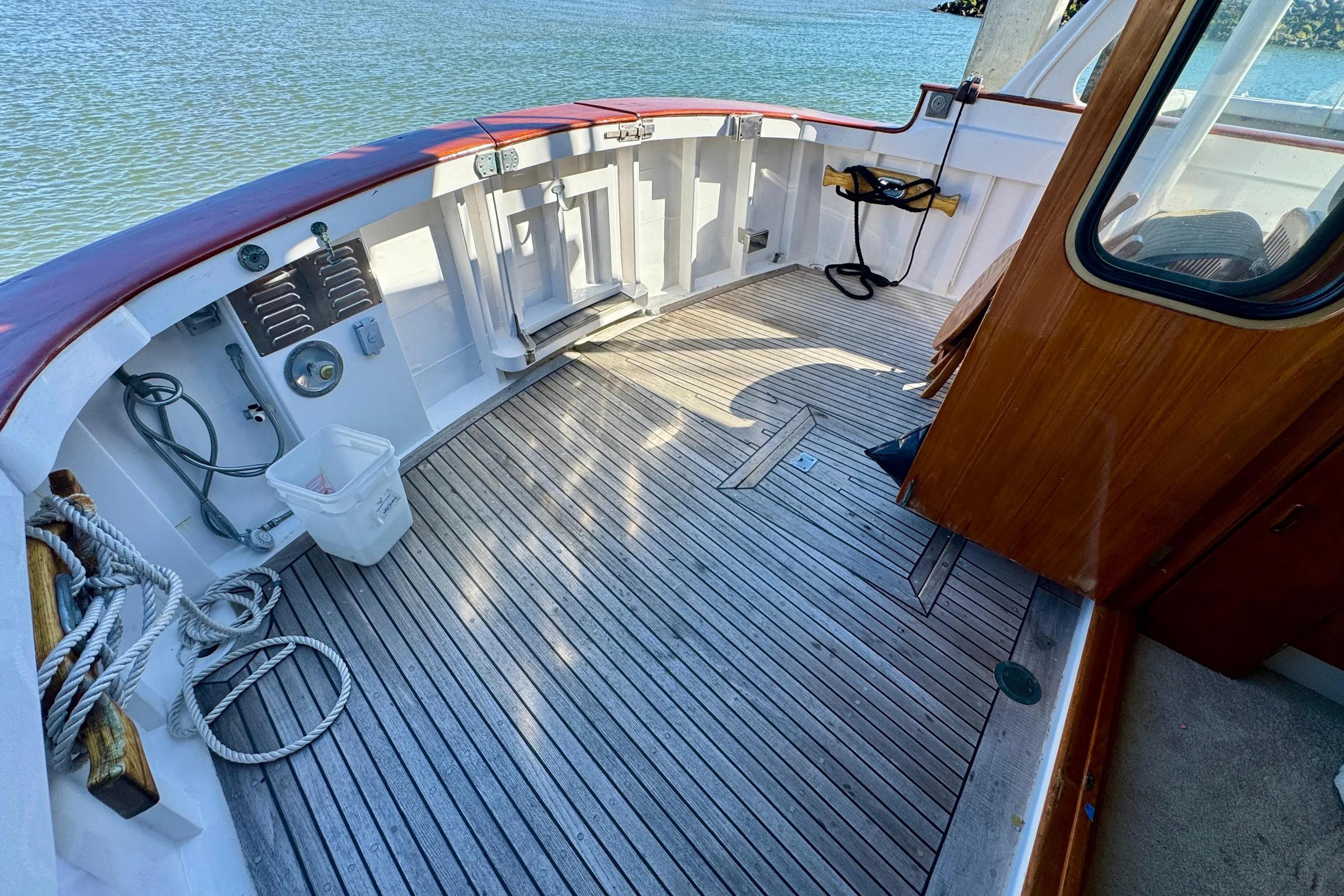
SEA WOLF was built with 1⅞-inch Alaskan yellow cedar planking, 1¾-inch white oak frames, heavy displacement hull structure, and traditional bronze fastenings and hardware. That scantling schedule is closer to commercial-vessel construction than to most pleasure yachts.
Rare Blanchard Heritage
The N. J. Blanchard Boat Company was among the finest wooden-boat builders on the West Coast. Large surviving Blanchard yachts are increasingly rare, and a 62-footer that has remained active and maintained is rarer still.
Layout Ahead of Its Time
Garden described the saloon-galley arrangement as specifically intended for owner-operated cruising in Pacific Northwest waters, where yachts often cruised without permanent crew. The layout encourages social interaction while keeping the vessel practical for a family. Today that sounds ordinary, but in 1958 it was remarkably forward-thinking.
Unique Design Features
What makes SEA WOLF especially interesting from a design standpoint is that Bill Garden was solving a problem that many yacht designers of the 1950s struggled with: how to create a truly livable cruising yacht without turning it into a top-heavy floating house. Garden discussed the original BLUE HERON III design as a serious family cruising yacht, and he was particularly proud of the way the accommodations were integrated into the hull rather than piled above it.
The Machinery Space as the Center of the Yacht
On most yachts of the era, the engine room was simply a necessary void buried beneath the saloon. Garden took a different approach. The engine room became the central structural and organizational element of the yacht. Rather than forcing the accommodations around it, he arranged the living spaces so that the machinery space sat low and central, with the principal accommodations naturally distributed fore and aft.
Why the Main Salon Works So Well
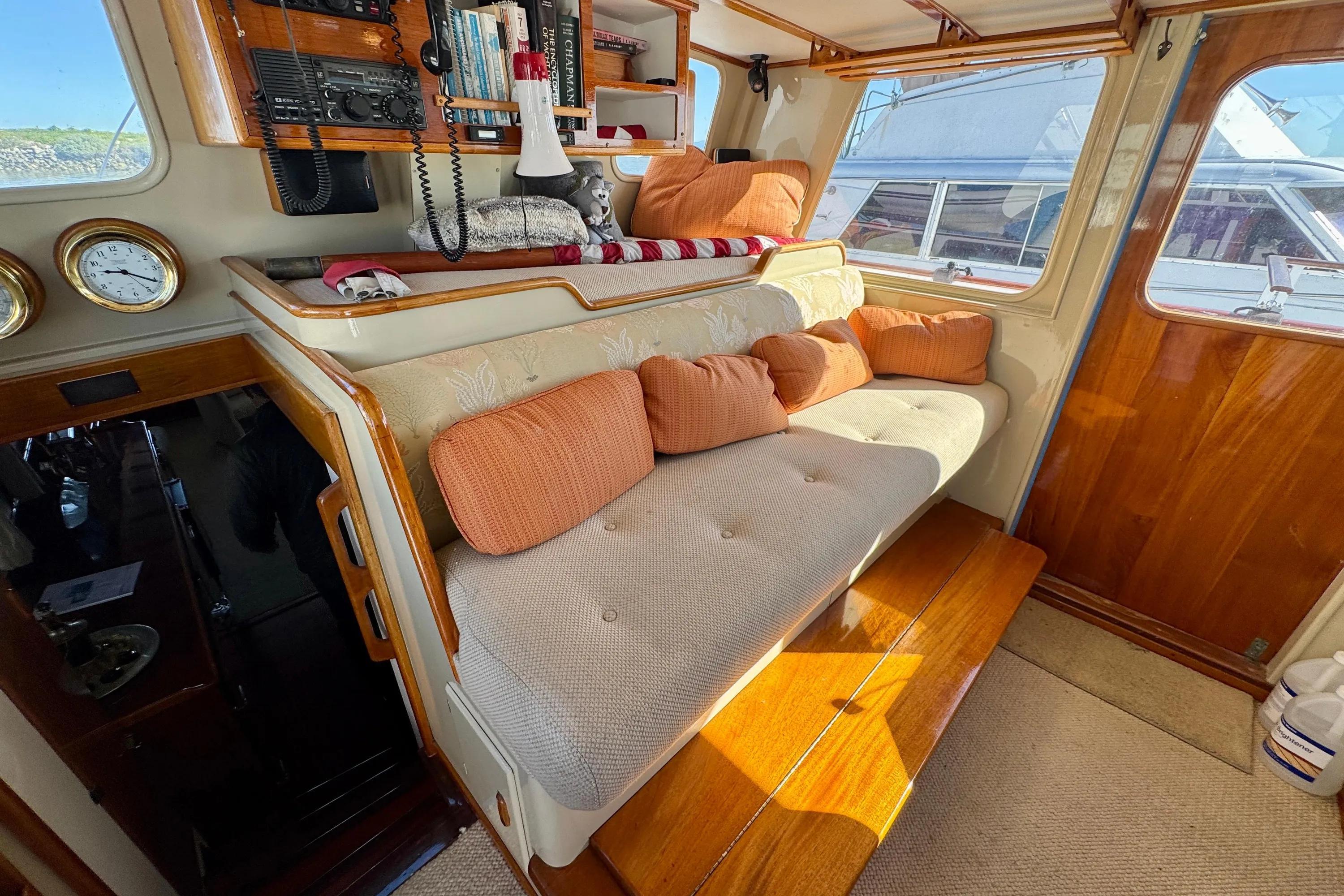
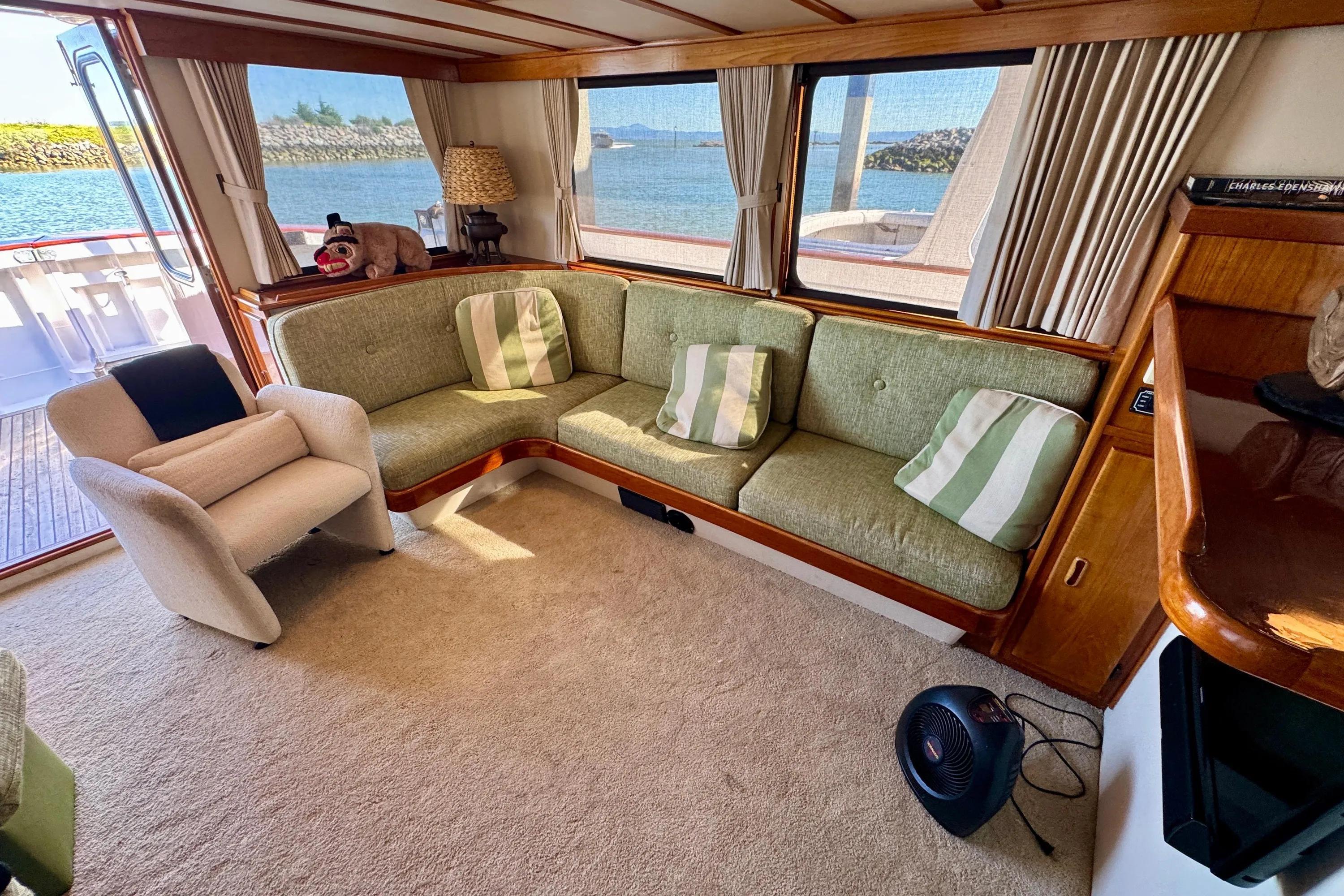
When you step into SEA WOLF's salon, one of the first things you notice is that it feels connected to the yacht rather than perched on top of it. The salon benefits from excellent sightlines out the side windows, a relatively low sole height, comfortable ceiling height without an excessively tall cabin trunk, and a feeling of security underway. Many modern yachts achieve volume by stacking living space higher above the waterline. SEA WOLF achieves comfort by sinking the living space deeper into the hull and distributing volume longitudinally. That gives the room a distinctly "shipboard" character.
The Galley Relationship
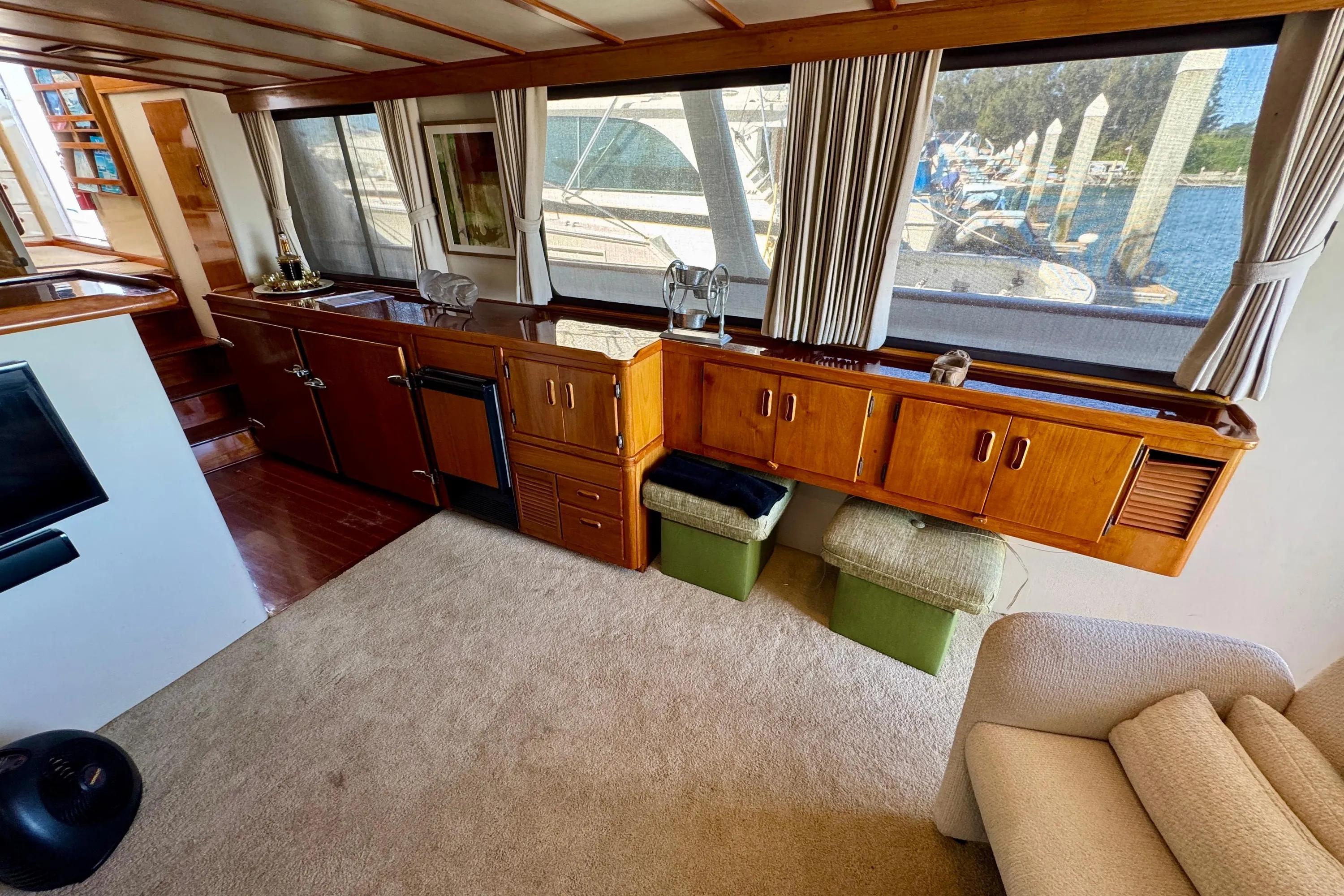
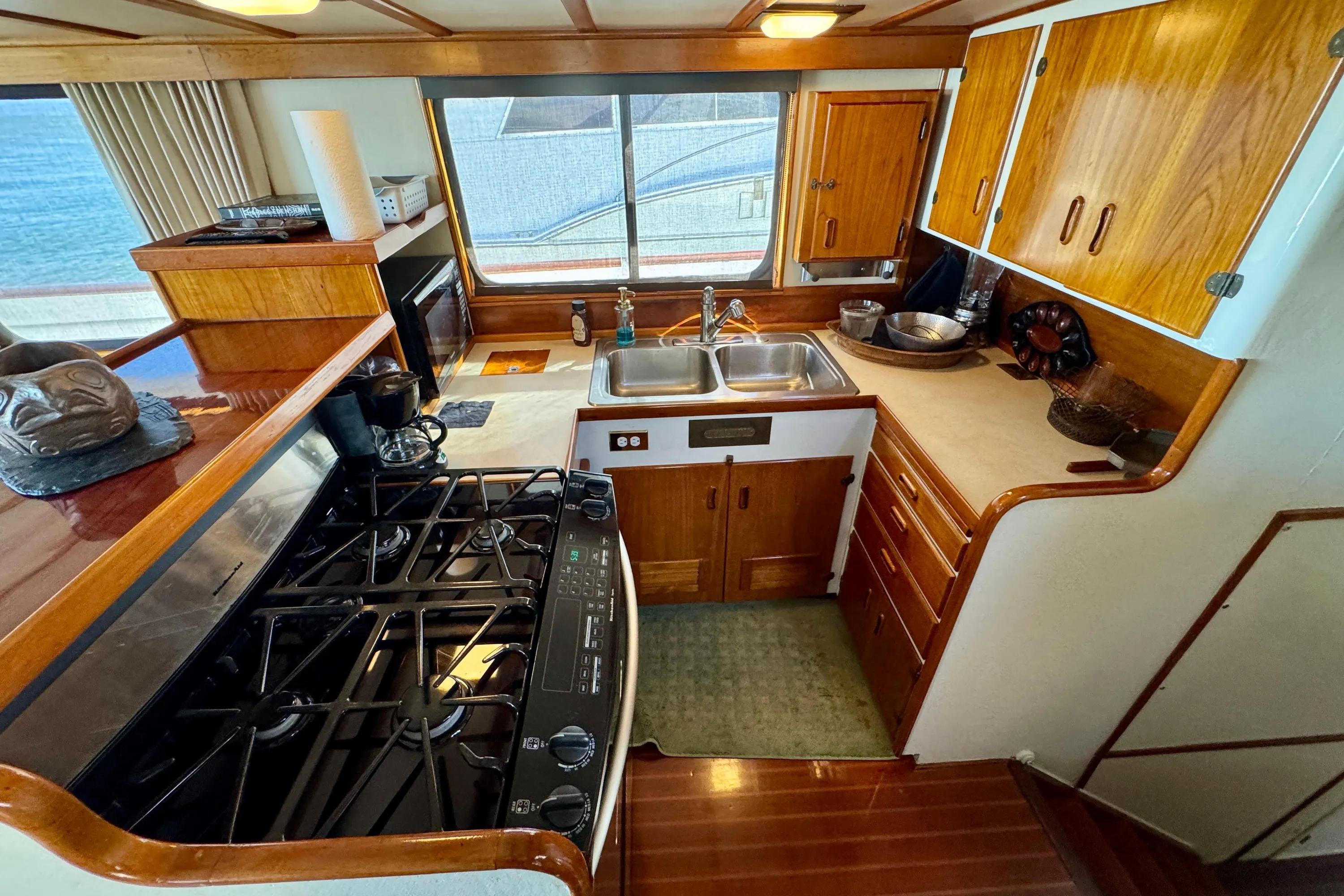
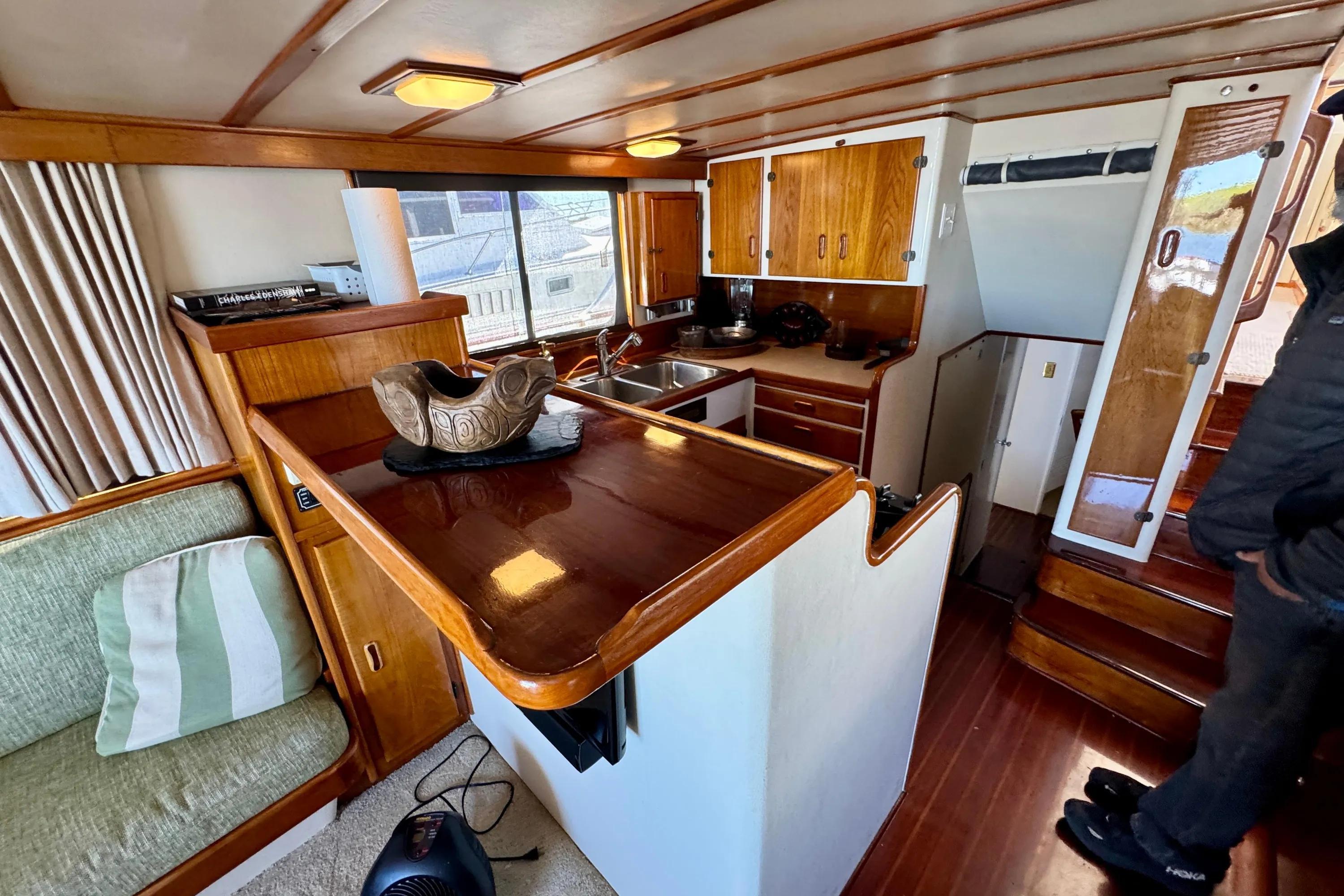
One of Garden's more forward-looking ideas was placing the galley so it remained socially connected to the salon while still functioning at sea. In many 1950s yachts the galley was isolated below decks and detached from the life of the vessel. On SEA WOLF the arrangement encourages conversation between salon and galley, easier service while underway, and better participation of the cook in family cruising life. Today that seems obvious, but in 1958 it was unusually modern.
The Master Stateroom Advantage
Another consequence of the machinery-space arrangement is the remarkable owner's stateroom. By pushing machinery into a compact central location and carefully managing shaft alleys and tankage, Garden was able to create accommodations that feel more like those of a much larger yacht. Owners often comment that the stateroom feels unusually generous for a 62-footer of that era.
Motion at Sea
Because the heavy machinery is concentrated low and near the center of gravity, pitching moments are reduced, roll is slower and more comfortable, machinery weight contributes positively to stability, and the yacht feels planted in the water. That characteristic is immediately noticeable when compared with many later motor yachts carrying substantial accommodation volume high above the waterline.
The "Garden Secret"
What Garden accomplished better than most designers of his generation was preserving the psychological feeling of being aboard a vessel. Many luxury yachts feel like waterfront condominiums. SEA WOLF feels like a ship. The salon, pilothouse, engine room, and accommodations are arranged around the realities of life at sea rather than around dockside entertaining. That is why, nearly seventy years later, knowledgeable yacht owners still admire the design. It is not merely beautiful—it is coherent. Every major space aboard supports the vessel's purpose as a long-range family cruising yacht. Among large wooden West Coast motoryachts of her era, that balance between engineering, seakeeping, and livability is what elevates SEA WOLF from a handsome classic yacht to a genuinely important Bill Garden design.
Specifications
The details
Vessel
MakeBlanchard
ModelPilothouse
Year1958
Dimensions
Length overall18.9m
Beam5m
Draft1.7m
Accommodation
Cabins3
Heads3
Engine & Fuel
Engine makeGM
Engine modelDetroit Diesel 6V92
Engine count2
Features
On board
Alaskan yellow cedar planking with white oak frames
Traditional bronze fastenings and hardware
Furuno LCR 72-mile radar
Furuno GPS
Robertson 100DL autopilot
Robertson R1100 rudder angle indicator
Icom VHF, ham, and SSB radios
Furuno weather fax
B&G Hornet instrument package
ACR Class A EPIRB
Clearview Sea Tel Satphone
Garmin 3210 GPS Map
Ritchie 5" compass
Northern Lights 12kw generator
32v Inverter/charger (Victron)
50-amp shore power service
Tank Tender waste water system
Detroit Diesel 6V92 twin engines
NAIAD stabilizers
Bow thruster (Side Power)
Offshore Marine Watermaker
Kabola B-17 heat system
Automatic fire suppression system
Dickinson BBQ
Kitchen Aid 4-burner stove and oven
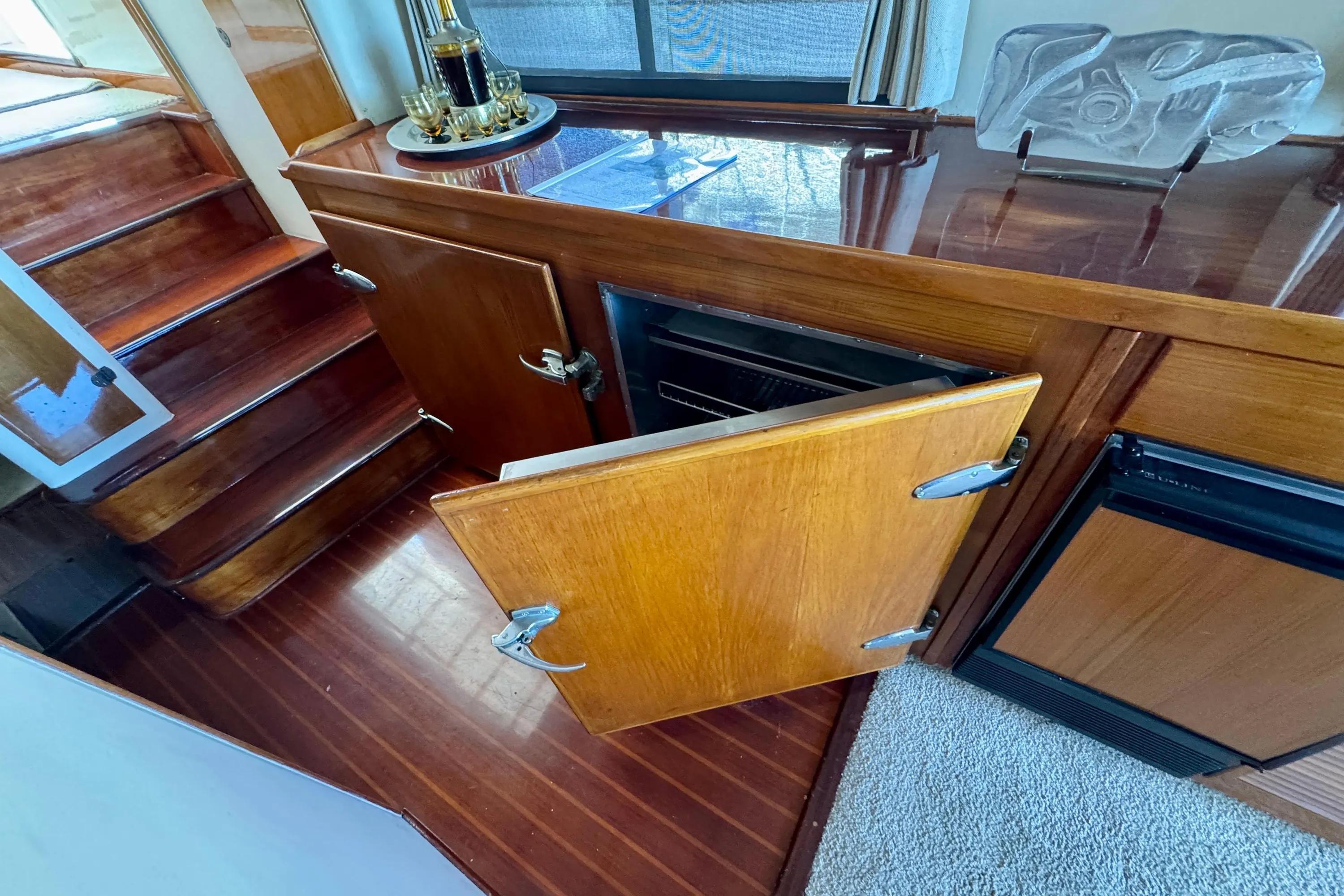
Side-by-side stainless refrigerator and freezer
U-Line ice maker
Bose Surround Sound System
Aiphone intercom system
Givens 8-man liferaft
Plath heavy duty windlass
Teak interior and cabinetry
Custom engraved ship's bell
Portuguese bridge with centerline wheel steering
You might also like
Similar listings
Broker
Tacoma, Washington, United States, United States
Ocean Alexander 50
$99,900 USD
15.8m · 1982
Broker
Fort Lauderdale, FL, United States
ORION Yacht for Sale
$495,000 USD
29m · 1970
Broker
Jupiter, Florida, United States, United States
Trumpy 72
$699,000 USD
21.9m · 1972
Broker
San Rafael, CA, United States
Alaskan
$129,000 USD
16.2m · 1977